Choose Ice Hockey Custom Jerseys That Fit Your Team and Timeline
Choose ice hockey custom jerseys by checking four things first: a fit that works over pads, durable fabric, clear names and numbers, and a design that meets your league’s rules. Before you order, confirm the full roster, approve the artwork, and get a delivery date that leaves room before your first game.
A jersey can help players look and feel like one team. For school and youth sports leaders, the harder part is getting every size, name, and number right on time. MiLockerRoom pairs teams with an experienced coach for hands-on design guidance and handles production in-house.
Why Custom Jerseys Strengthen Team Identity
Stepping onto the ice in a generic practice pinnie or an off-the-rack sweater simply does not deliver the same energy as pulling on a fully tailored uniform. In hockey, the sweater is sacred. It carries the weight of your squad’s history, local pride, and collective ambition. When every skater lines up along the blue line wearing identical, sharp uniforms, it instantly establishes mutual respect and psychological readiness before the puck even drops.
The broader sporting world reflects this cultural focus. The global custom sports jersey market is projected to expand at a compound annual growth rate of 8.5% through 2030, largely fueled by rising demand for personalized apparel across grassroots, school, and recreational leagues. In hockey, the connection is especially pronounced: research shows that over 60% of ice hockey players prefer custom jerseys over stock options to build a stronger sense of team identity and individual pride.
Beyond looking clean on game day, quality apparel plays a tangible role in player retention and team morale. When clubs invest in high-grade custom team uniforms, athletes feel valued. Whether managing a high school varsity program, an adult rec league squad, or a youth travel club, visual cohesion builds belonging. Personalized elements like unique color palettes, bold striping, and sharp typography turn a collection of individuals into a unified unit that opponents notice immediately.
Key Materials and Performance Features for Durability
Hockey is tough on apparel. Between skate blades, stick checks, abrasive boards, and Velcro from protective pads, standard athletic shirts quickly tear under rink conditions. Crafting a sweater that lasts through grueling seasons requires heavy-duty synthetic knits designed specifically for contact sports.
The foundation of any high-performance hockey jersey is polyester knit construction. Modern fabrics balance heavy abrasion resistance with moisture management, pulling heavy sweat away from the body so skaters do not carry extra water weight during extended shifts.
| Fabric Type | Weight / Density | Primary Benefits | Best Application | Durability Level |
|---|---|---|---|---|
| Heavy-Duty Airknit | High (200–240 GSM) | Breathable open-mesh weave, exceptional snag resistance | Main body, heavy-contact amateur and pro play | Extremely High |
| Pro-Brite / Dazzle | High (200–220 GSM) | Lustrous smooth finish, vibrant color reproduction | Shoulders, accent yokes, decorative inserts | High |
| Pro-Mesh / Flow Knit | Lightweight (150–180 GSM) | Maximum airflow, quick drying, flexible stretch | Underarm gussets, side ventilation panels | Moderate to High |
| Kevlar / Reinforced Poly | Very High (260+ GSM) | Cut and tear resistance, structural support | Elbow caps, forearm wear zones | Maximum |
To withstand physical play, look for these structural details:
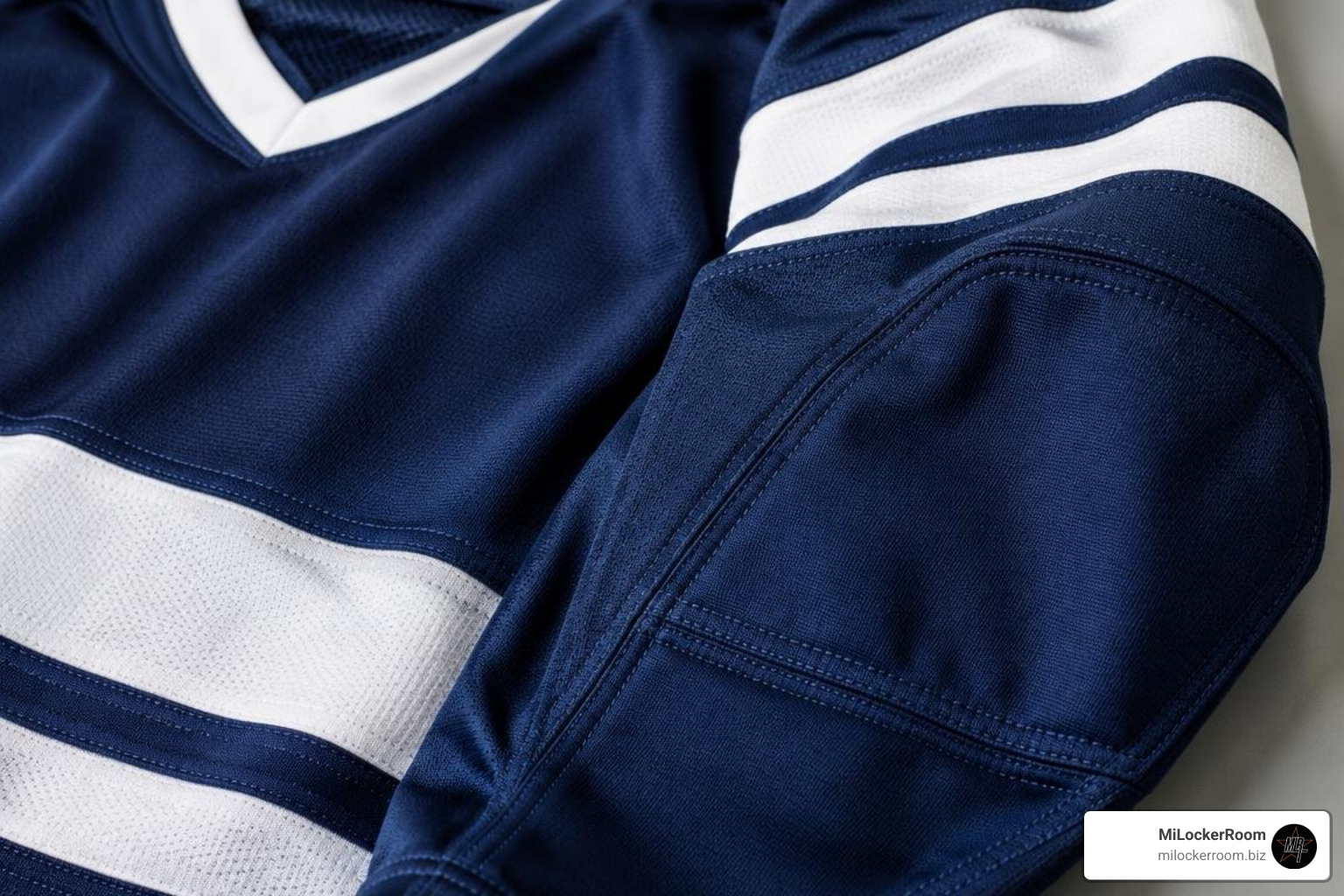
- Reinforced Elbows and Shoulders: High-wear zones need dual-layer fabric panels to resist tears when players fall or rub against the glass.
- Interlock Double Stitching: Seams along the sleeves and shoulders should feature multi-needle cover stitching to prevent splitting during physical battles.
- Ventilation Gussets: Breathable mesh inserts under the arms release heat and allow natural movement through stickhandling and shooting motions.
- Fight Straps: Pro-cut sweaters feature an interior tie-down strap that attaches directly to the pant waistband, keeping the jersey securely positioned during contact.
Essential Features When Ordering Ice Hockey Custom Jerseys
Getting the design right requires attention to cut, structure, and graphic construction. A standard sports cut will not work over bulky shoulder pads and elbow protectors.
When choosing cuts, teams generally select between traditional wide cuts (featuring loose, boxy torsos with wide sleeves) and modern athletic tapered cuts. Athletic cuts keep excess fabric closer to the pads to minimize grab points along the boards. Collar construction also shapes both style and comfort. Popular collar styles include:
- V-Neck with Insert: A classic, flexible option providing quick ventilation.
- Laced Pro Collar: Offers vintage appeal using functional or decorative hockey laces.
- Keyhole / Tapered Collar: Modern style featuring a small fabric crossover at the base of the throat.
Color consistency is equally essential. When moving digital concepts to real fabrics, exact Pantone or CMYK matching ensures that your crest colors match sleeve striping, socks, and pant shells across every production run.
Core Printing Methods for Ice Hockey Custom Jerseys
The method used to apply your artwork determines how long your uniform looks pristine. While screen printing works fine for standard cotton t-shirts, hockey gear requires more durable methods.
Sublimation has become the industry standard for modern athletic uniforms, contributing to a 22% year-over-year increase in custom hockey jersey sales since 2020. Through dye sublimation, high-heat inks bond directly with the synthetic polyester fibers. This makes the graphics completely permanent: they will not crack, peel, or fade, and the jersey stays light and breathable.
Teams seeking a classic, premium look often choose tackle twill and direct embroidery. Tackle twill uses individual nylon or polyester fabric layers cut to shape and machine-stitched directly onto the sweater body. This delivers the rich, heavy texture seen in professional leagues. You can review different styles across our custom jerseys catalog to compare sublimated styles with stitched multi-layer applications.
Personalizing Names, Numbers, and Crests on Ice Hockey Custom Jerseys
Customizing player identifiers requires careful planning. Industry data indicates that approximately 45% of orders center around bespoke front crests, while 35% focus on complete player names and back numbering.
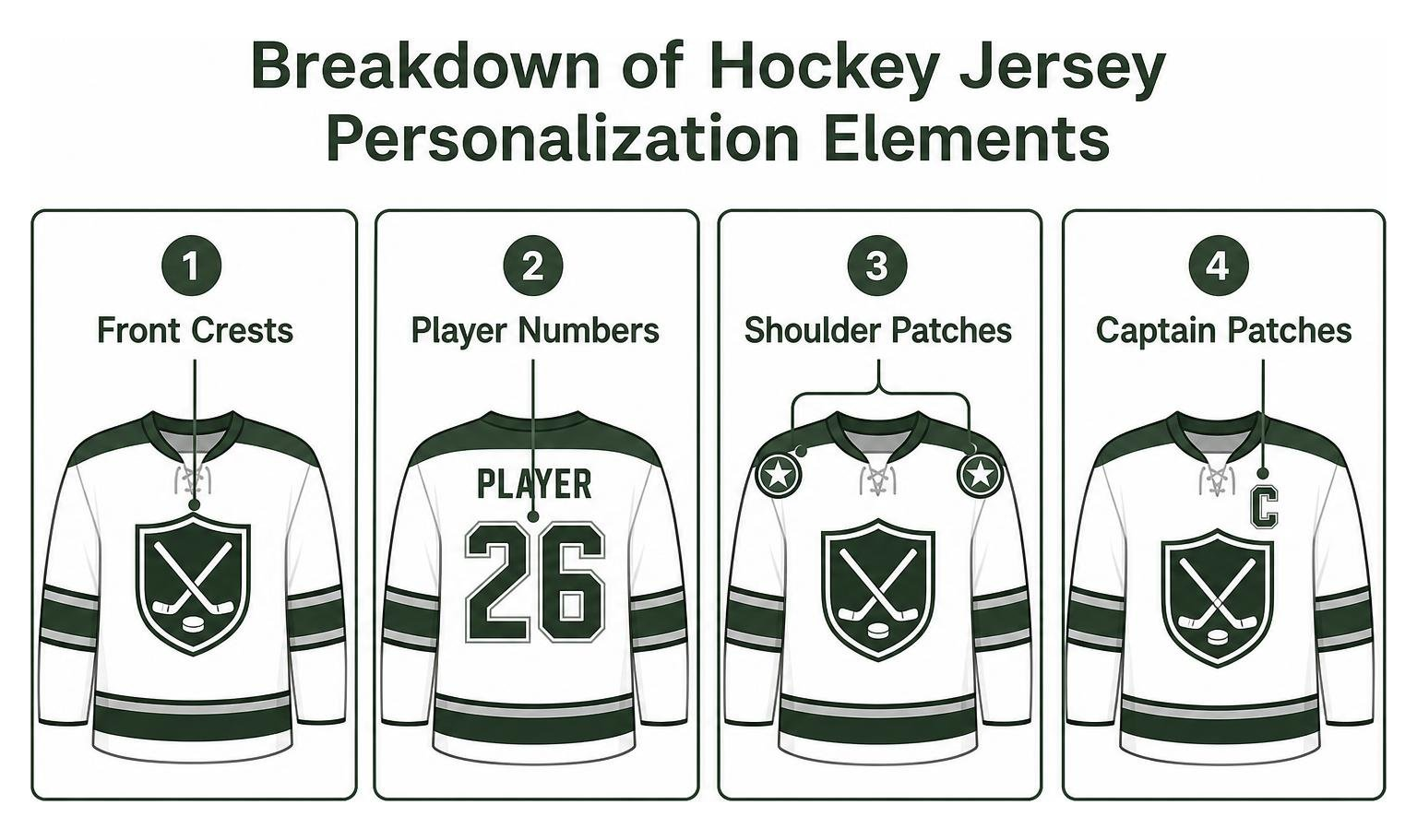
Key personalization zones include:
- Main Front Crest: Positioned centrally across the chest, sized between 10 and 12 inches wide to maximize visual impact.
- Back Player Numbers: Ranging from 10 to 12 inches in height, back numbers must contrast sharply against the primary jersey color for clear identification from the referee crease and scorekeeper box.
- Shoulder and Sleeve Numbers: Typically sized at 4 inches tall, sleeve numbers help officials track player penalties quickly.
- Shoulder Patches (Secondary Logos): Placed high on the shoulders to showcase secondary emblems, state flags, or tournament logos.
- Captain and Alternate Patches: Crisp “C” and “A” designations, typically measuring 3 to 4 inches, positioned over the upper-left chest.
Ordering Logistics: Costs, Lead Times, and League Regulations
Organizing an apparel order for an entire roster requires clear budgets and timelines. Individual custom sweaters usually range from $55 to $130 per unit, depending on whether you choose fully sublimated lightweight options or multi-layer tackle twill with fight straps. Most programs take advantage of bulk team pricing by ordering game uniforms, practice jerseys, socks, and coach shells together.
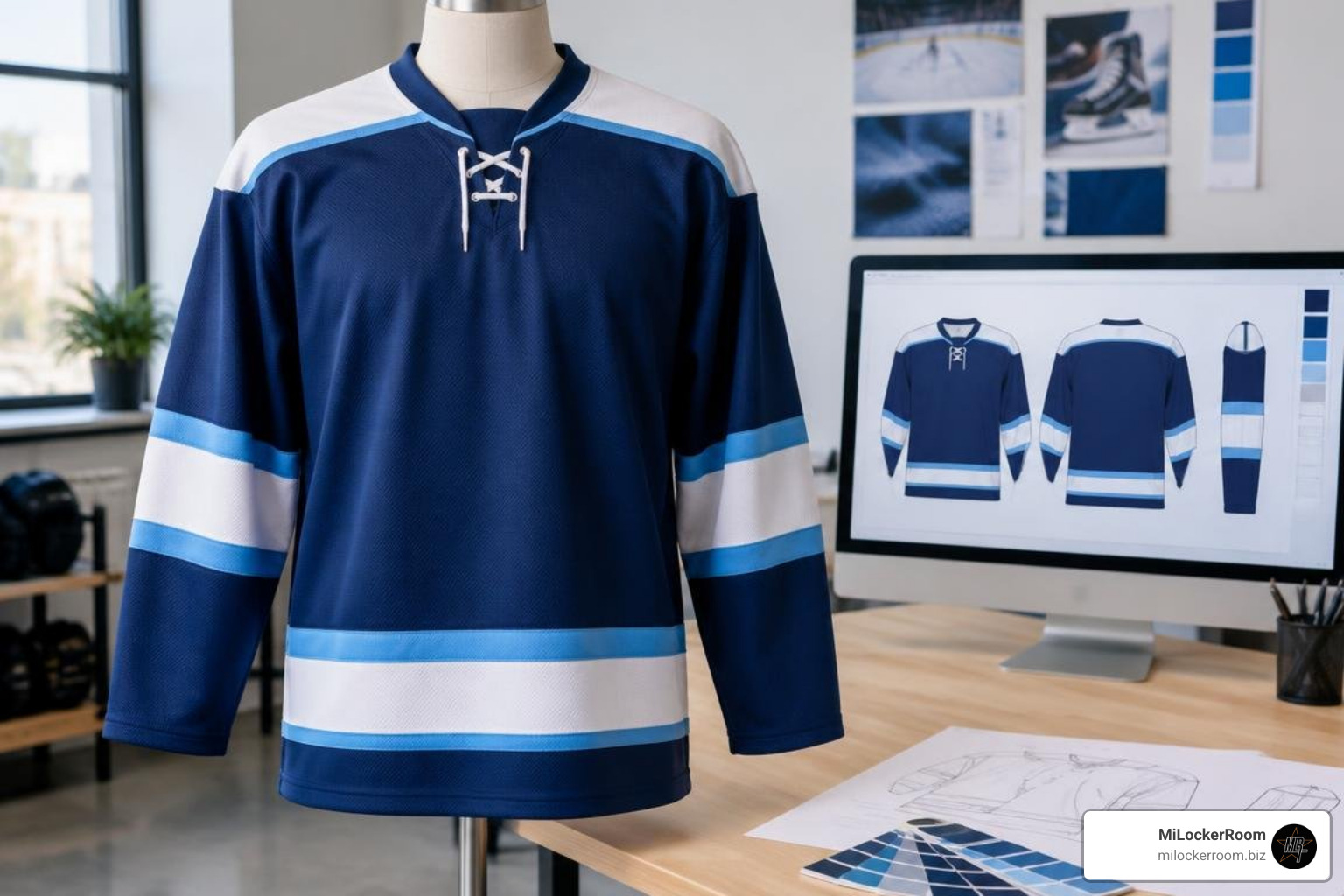
When ordering, factor in common scheduling constraints:
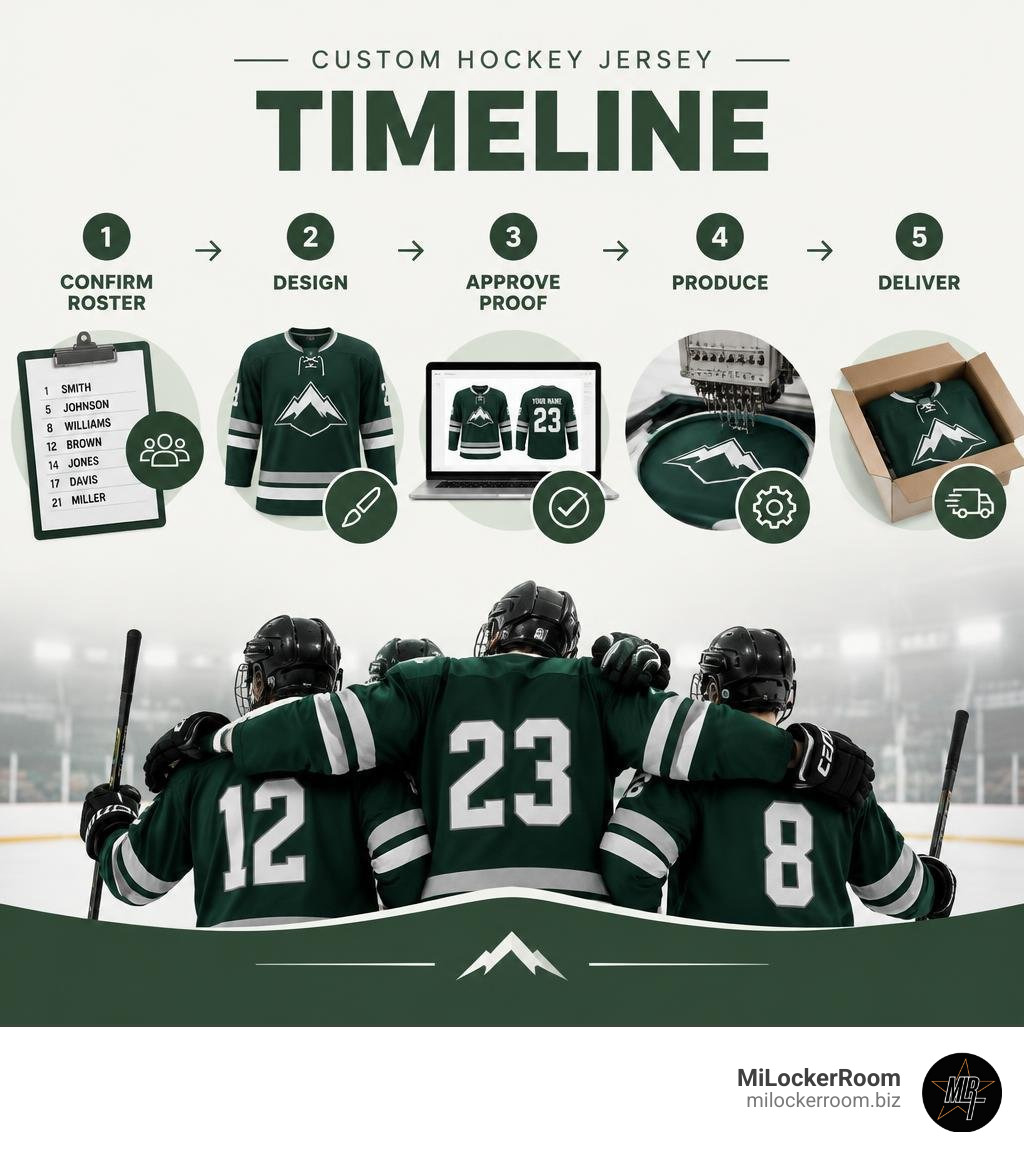
- Design & Proofing Phase: 1 to 2 weeks for initial concepts, roster compilation, and final digital vector proof sign-off.
- Production Turnaround: 3 to 6 weeks depending on the time of year. Summer and late fall usually bring higher demand ahead of winter seasons.
- Shipping & Final Check: 3 to 7 business days for transit, sorting, and roster validation.
Always check your governing body’s rulebook before finalizing artwork. Our team regularly reviews sports apparel requirements to make sure designs pass inspection before production starts.
If your team competes in regional, national, or international tournaments, your designs must comply with established standard guidelines, such as the Art. 9 Uniforms — IIHF Rule Book. These regulations specify proper contrast between light home and dark away jerseys, along with precise nameplate sizing and number dimensions.
Best Practices for Washing and Caring for Ice Hockey Uniforms
High-performance hockey uniforms represent a significant team investment. Proper washing and storage habits will keep fabrics bright, prevent snagging, and preserve crest stitching for seasons to come.
- Do:
- Wash jerseys inside-out using cold water and a gentle wash cycle.
- Fasten all Velcro straps on elbow pads and pants before storing them near jerseys to prevent snagging.
- Use mild liquid detergent free of harsh optical brighteners or bleach.
- Hang jerseys on broad plastic hangers to air dry completely after every skate.
- Don’t:
- Never use high heat in a tumble dryer; intense heat can shrink technical polyester, warp twill crests, and melt heat-applied adhesives.
- Never leave damp, sweaty jerseys zipped inside an airtight equipment bag overnight, as trapped moisture breeds mildew and weakens fabric fibers.
- Never iron directly over sublimated graphics, heat transfers, or embroidered patches.
- Never mix game jerseys with heavy canvas bags, abrasive skate covers, or Velcro-heavy gear in the same laundry load.
Frequently Asked Questions About Custom Ice Hockey Uniforms
How long does it typically take to produce custom hockey jerseys?
Standard production generally ranges from 3 to 5 weeks once you approve your digital proofs and confirm your complete roster sizing. During peak fall ordering windows, planning for 5 to 7 weeks helps ensure your uniforms arrive well before your first pre-season exhibition game.
What is the difference between sublimated and tackle twill jerseys?
Sublimation infuses dye directly into the fabric strands, creating a smooth, lightweight, and durable jersey where artwork will never peel or crack. Tackle twill uses cut fabric patches and embroidery stitched onto the jersey, delivering a heavier, classic pro-style finish.
How do leagues regulate jersey colors and number placement?
Most leagues require teams to maintain two distinct uniform sets: a light base (white or cream) for home games and a dark base (navy, black, red, or royal) for away games. Numbering must contrast clearly against the main body fabric, typically measuring at least 10 inches on the back and 4 inches on the sleeves.
Conclusion
A well-crafted hockey sweater brings a squad together, turns heads at the rink, and stands up to physical game action week after week. Selecting durable knits, dialing in accurate sizing, and respecting league rules turns a simple uniform into an asset that players wear with pride.
At MiLockerRoom, we replace catalog guesswork with a personal, coach-led approach. We pair your team one-on-one with experienced coaches who understand hockey’s specific demands—from shoulder-pad drop to elbow reinforcement. With reliable in-house production, your gear is built right and delivered on time. If you are ready to update your look this season, connect with our crew and design your next uniform package directly. For custom sizing kits or team inquiries, Contact Us today.