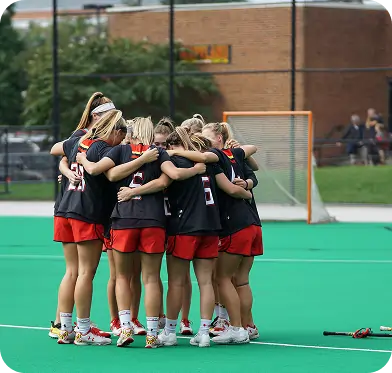
How to Design Custom Field Hockey Jerseys Your Team Can Count On
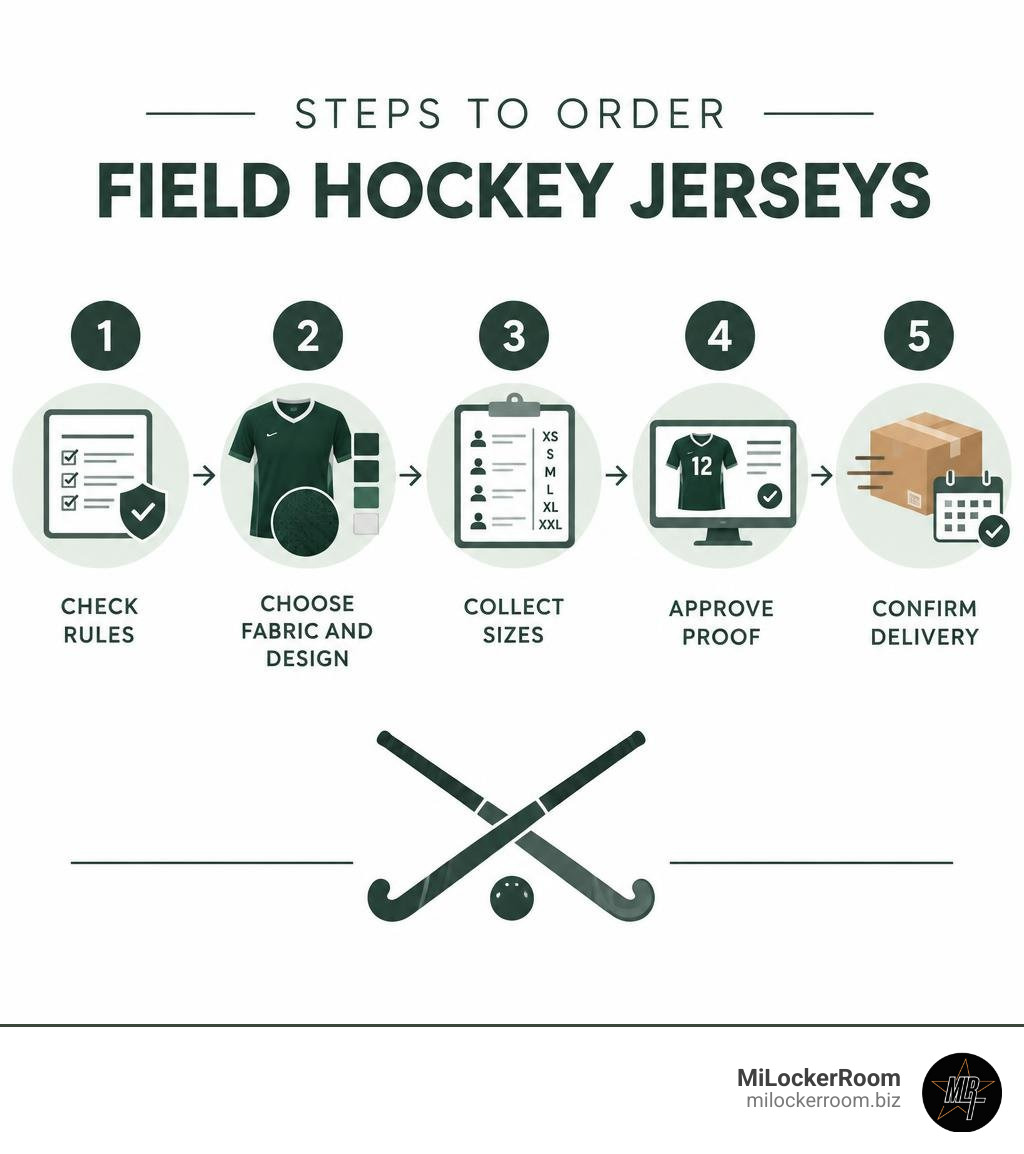
To design custom field hockey jerseys, check your league’s uniform rules first. Then choose team colors, a breathable fabric, and a design players can move in. Collect sizes, names, and numbers on one roster. Before you approve the order, check the design proof, total cost, and delivery date against your first game.
A good jersey should help players stay comfortable while making the team easy to recognize. MiLockerRoom pairs schools and clubs with experienced coaches for one-on-one design guidance, with production handled in-house.
Field hockey is played by over 30 million athletes worldwide across more than 130 countries. As the sport continues to grow, the demand for high-caliber, specialized team gear has skyrocketed. At the same time, the global custom sportswear market is projected to reach $5.4 billion by 2028, expanding at a steady compound annual growth rate of 6.2%. Today’s players and coaches expect gear that delivers both high aesthetic appeal and unmatched durability under physical game conditions.
Why High-Performance Custom Field Hockey Jerseys Outperform Stock Kits
Off-the-shelf catalog jerseys might seem convenient at first glance, but standard stock apparel often falls short when put to the test on game day. Field hockey requires unique body mechanics: low defensive stances, explosive multi-directional sprinting, quick stick rotations, and high-impact contact. Generic jerseys rarely accommodate these demands.
Investing in tailored custom team uniforms and apparel gives programs complete control over cut, fit, fabric performance, and aesthetic identity. Custom kits are tailored specifically for dynamic turf movement, ensuring your athletes focus on their positioning and ball control rather than adjusting ill-fitting sleeves or struggling with trapped heat.
| Feature / Benefit | Full Dye-Sublimation Jerseys | Traditional Screen-Printed Stock Kits |
|---|---|---|
| Durability & Lifespan | 40% longer lifespan; zero cracking, peeling, or fading | Graphics often crack, flake, or peel after multiple washes |
| Breathability & Weight | Ink becomes part of the yarn; 100% breathable and lightweight | Thick ink layers create heavy, non-breathable “sweat patches” |
| Design Flexibility | Unlimited colors, gradients, side-panel patterns, and custom fonts | Limited ink colors; extra charges for each additional print color |
| Turf Abrasion Resistance | Resists snagging and friction burns from artificial pitches | Screen ink scuffs and wears away quickly upon impact |
| Compliance & Regulation | Built from scratch to meet official NFHS, NCAA, and FIH rules | May lack required number contrast, solid backs, or border margins |
Stock jerseys also present supply chain headaches. When a stock line is discontinued by a mass manufacturer next season, teams are often forced to buy completely new kits for the entire squad just to outfit a handful of incoming freshmen. With fully customized production, your team patterns remain on file, making repeat orders and roster additions effortless year after year.
Performance Fabrics and Moisture-Wicking Technology
Modern field hockey is one of the fastest sports in the world, especially when played on wet or dry synthetic turf pitches. High-speed running and stick skills generate intense body heat. This is why moisture-wicking fabric jerseys account for 78% of all custom field hockey jersey orders.
When selecting materials for your squad, look for advanced technical fabrics such as:
- Micro-Interlock Polyester: A smooth, tightly woven, lightweight fabric that resists snagging from sticks while providing a sleek drape.
- Strategic Mesh Ventilation: Breathable pin-hole or jacquard mesh placed along the side panels, underarms, and lower back to promote active airflow and thermal regulation.
- Four-Way Stretch Blends: Elastane-infused polyester that bends and rebounds alongside your players during deep lunges, sweeping passes, and reverse-stick hits.
- Antimicrobial and Anti-Odor Treatments: Fabric finishes that actively prevent the buildup of odor-causing bacteria across double-header weekends and grueling tournament schedules.
Sublimation vs. Traditional Screen Printing for Long-Lasting Durability
One of the most important decisions when creating team tops is the printing method. While traditional screen printing applies a heavy layer of plastisol ink on top of the fabric, dye-sublimation uses heat and pressure to infuse dye directly into the polyester fibers at a molecular level.
Because the ink becomes a permanent part of the yarn, custom jerseys with sublimated designs have a 40% longer lifespan than screen-printed garments. Sublimation will not crack, peel, or flake, even after dozens of aggressive machine washes or heavy turf slides. Furthermore, because no heavy ink sits on the surface of the shirt, the jersey maintains maximum breathability and a featherlight feel in high-temperature conditions.
Step-by-Step Guide to Designing Your Team’s Field Hockey Uniforms
Designing a custom uniform from scratch should be an exciting and creative process for coaches, athletic directors, and team captains.
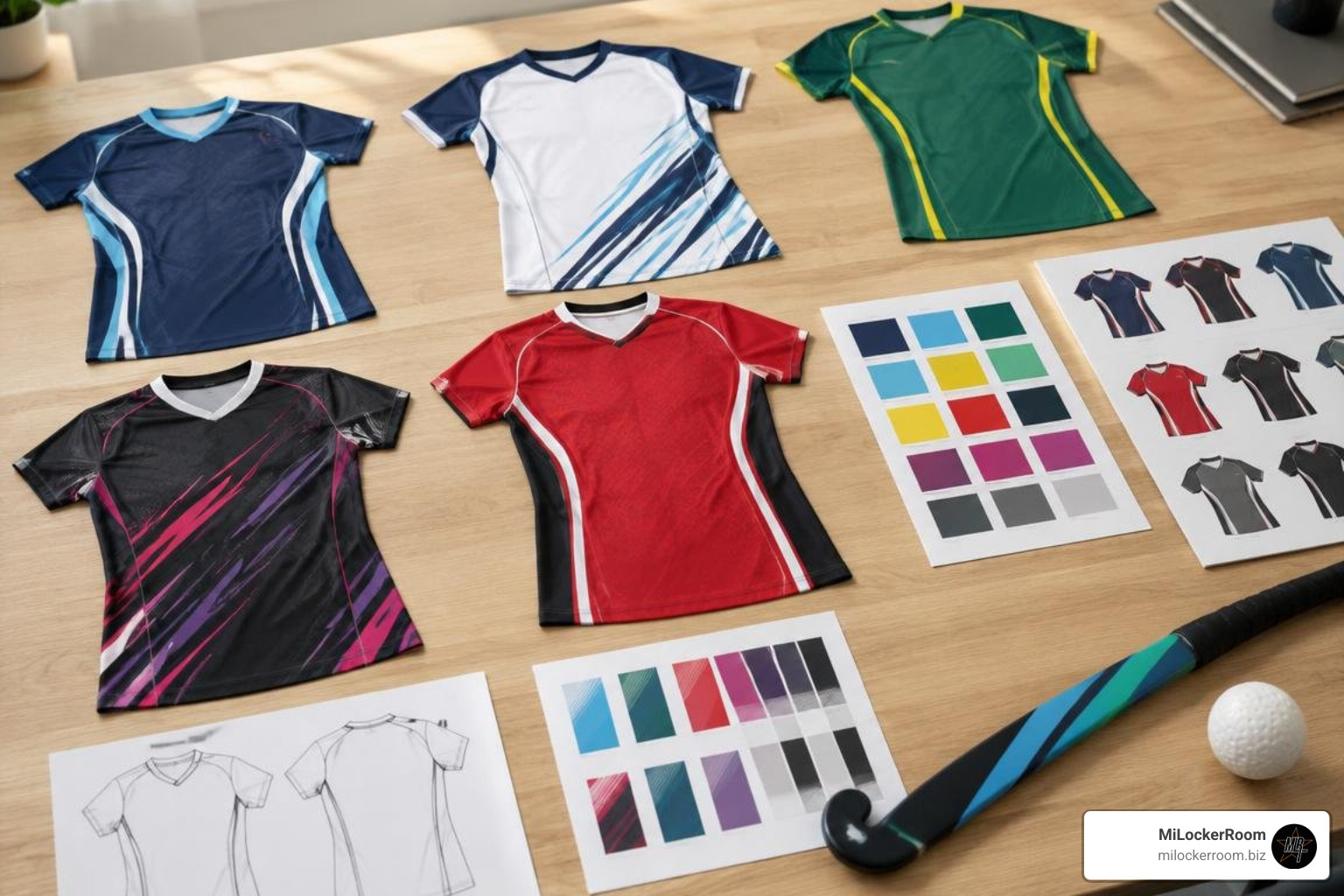
Here is a straightforward design framework:
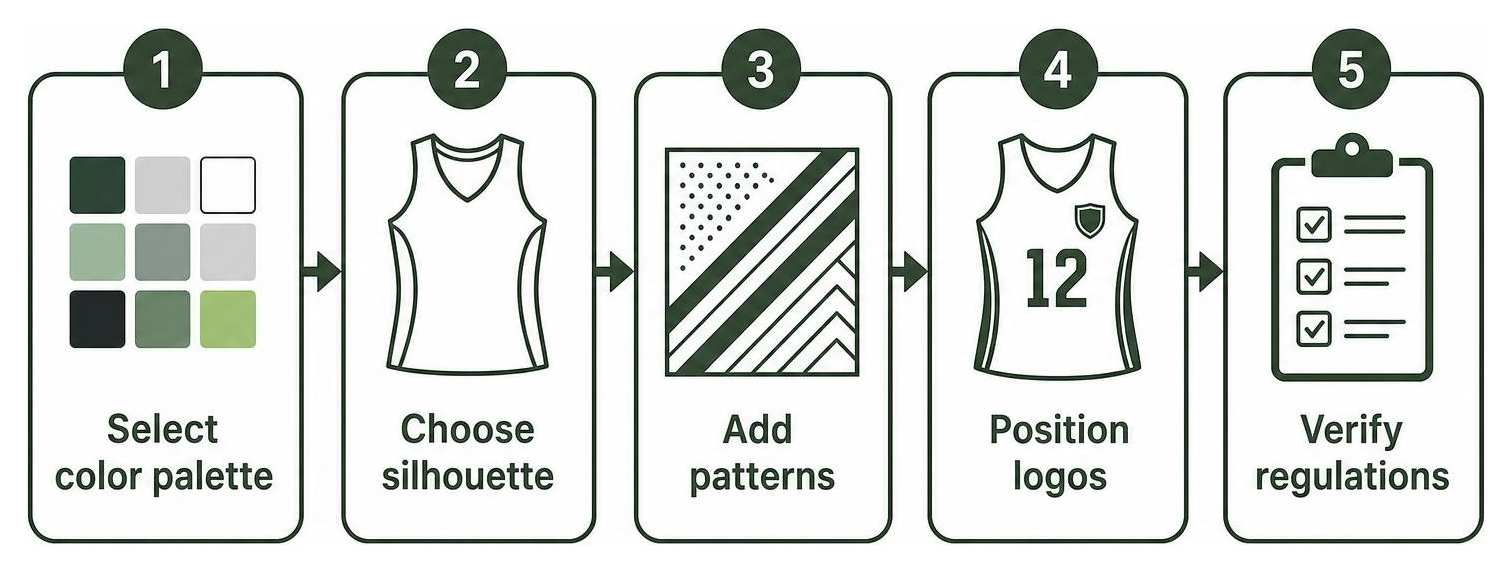
- Select Your Core Palette: Identify your primary school or club color, a dominant secondary tone, and an accent color. Ensure your home kit uses light tones and your away kit uses contrasting dark tones.
- Choose the Cut and Silhouette: Decide between modern racerback cuts, sleeveless athletic tops, or traditional short-sleeve jerseys based on your team’s comfort and regional weather.
- Incorporate Dynamic Patterns: Elevate your look beyond plain solid blocks. Subtle geometric patterns, fading gradients, or custom shoulder stripes add a professional aesthetic.
- Position Identity Elements: Place your primary crest over the left chest, add high-contrast numbers on the front and back, and incorporate school mottos or mascot details along the inner collar or hemline.
Essential Customization Options for Custom Field Hockey Jerseys
When designing top-tier custom jerseys, you have total creative freedom to build a uniform that represents your program’s culture and heritage:
- Player Names & Numbers: Sharp, legible player names arched across the upper back paired with bold 6- to 8-inch back numbers and 4-inch front numbers.
- Embroidered or Sublimated Crests: High-definition club shields, mascot artwork, or traditional school crests placed prominently on the chest.
- Sponsor Integration: Dedicated placements on the sleeves, lower back, or chest for booster clubs and community sponsors, built right into the dye without extra weight.
- Custom Necklines: Choose from athletic V-necks, modern crew necks, or hybrid collars tailored for jersey durability.
League Regulations and Jersey Compliance
Before finalizing any uniform art, verify that your design aligns with your governing organization’s official rulebook:
- NFHS (High School): Home teams typically must wear white or light-colored jerseys, while visiting teams wear dark tops. Numbering must be clearly contrasting, centered on the front and back, and free of confusing background patterns that impede referee visibility.
- NCAA (Collegiate): Strict guidelines govern front and back number sizes, manufacturer logo sizing (typically no larger than 2.25 square inches), and color contrast for both field players and goalkeepers.
- FIH (International/Club): International regulations require opposing teams to wear distinctly contrasting shirts and socks. Goalkeepers must always wear a jersey color that clearly differentiates them from both their teammates and the opposing team’s field players.
Ordering and Production: Sizing, Timelines, and Bulk Savings
Proper planning and roster coordination eliminate the pre-season scramble and ensure your squad steps onto the turf fully outfitted on opening day.

How to Budget and Order Custom Field Hockey Jerseys in Bulk
Managing athletic department budgets requires smart procurement. Ordering your team gear in volume provides substantial savings that can be redirected toward travel, tournament entry fees, or new practice balls. In fact, teams that order custom jerseys in bulk (20+ units) save an average of 35% per jersey compared to single-unit orders.
Whether you are outfitting a middle school squad, varsity team, or entire regional club across various school and club sports, combining your uniform orders into a single batch run maximizes volume pricing discounts and keeps per-unit manufacturing costs as low as possible.
Sizing and Roster Planning for Peak Season Readiness
Fit is critical for high-speed athletic performance. Follow this timeline to ensure a smooth ordering experience:
- 10–12 Weeks Before Season Opener: Request a physical sizing kit. Having players try on actual sample sizes ensures an accurate fit across standard and racerback cuts.
- 8–10 Weeks Before Season Opener: Finalize custom artwork, select Pantone-matched colors, and verify roster details (player spellings, preferred numbers, and sizes).
- 6–8 Weeks Before Season Opener: Sign off on the final digital proof and submit the production order.
- 2–3 Weeks Before Season Opener: Uniforms arrive at your facility, allowing ample time for inventory verification and distribution before photo day.
Caring for Your Uniforms: Washing and Maintenance Best Practices
To protect your investment and preserve fabric performance year after year, follow these essential maintenance guidelines:
- Pre-Treat Stains Immediately: Treat turf burn marks, mud, and grass stains promptly with a gentle enzyme stain remover before washing.
- Wash in Cold Water: Always machine wash uniforms inside-out in cold water (below 85°F / 30°C) on a gentle cycle.
- Use Mild Liquid Detergent: Avoid heavy-duty powder detergents, chlorine bleach, or brightening agents that can break down technical polyester fibers.
- Skip Fabric Softeners: Fabric softeners leave a waxy coating that clogs technical micro-pores, severely reducing moisture-wicking and breathability.
- Air Dry or Tumble Dry on Low: Hang jerseys to air dry whenever possible. If using a machine dryer, select a no-heat or low-heat cycle to avoid damaging the seams.
Frequently Asked Questions About Field Hockey Uniforms
What is the typical turnaround time for custom field hockey team kits?
Standard production for fully sublimated custom jerseys generally takes between 3 to 5 weeks after the final artwork and roster approval. We recommend starting the design and sizing process at least 8 to 10 weeks before your team’s first pre-season scrimmage to accommodate proofing and shipping.
What fabric is best suited for competitive field hockey jerseys?
A lightweight, 100% moisture-wicking micro-interlock polyester (ranging from 140 to 180 GSM) combined with breathable stretch-mesh side panels is the gold standard. It provides the ideal balance of snag resistance, flexibility, sweat management, and airflow.
How do bulk orders affect the overall cost of team jerseys?
Submitting bulk orders substantially reduces manufacturing setup costs per garment. Ordering in batches of 20 or more units typically yields up to 35% in savings per jersey compared to one-off replacement runs, making bulk procurement the most cost-effective path for clubs and athletic departments.
Conclusion
A well-designed, pro-grade field hockey jersey does far more than satisfy league rules—it builds program pride, enhances player comfort, and unites your roster into a confident, cohesive unit every time they step across the lines. By choosing durable technical fabrics, full dye-sublimation printing, and athletic cuts tailored for the sport, you ensure your team looks sharp and plays at its peak all season long.
At MiLockerRoom, we replace confusing online catalogs with direct, personalized guidance. We pair your team one-on-one with experienced coaches who understand the sport and guide your design from the ground up, backed by dependable in-house production.
Ready to elevate your squad’s turf presence this season? Visit our homepage and start designing your custom field hockey jerseys today.